Context
Poczta Polska is the national postal operator and an organisation of more than 80,000 people. Inside it, a postage stamp is not a souvenir: it is a regulated instrument with its own issuing calendar, print run and philatelic discipline. The Polish Crypto Stamp was released as an issue whose digital counterpart lives on a blockchain. I led the work from concept to market launch, accountable for the whole of it, commercial, technical, legal, and the external partners.
Problem
Three sets of requirements met that normally never appear together. Philately imposes issuing discipline: what is inside the print run, how it is numbered, what is and is not a stamp. Law defines what a postal value indicator is and what the operator may do with it. Blockchain imposes its own constraint, the record is irreversible, and a mistake in an issue cannot be withdrawn by an erratum.
The obvious route was to treat the release as an NFT drop: mint a collection, list it on a secondary market, ask the buyer to connect a wallet. It failed on a single assumption. It presumes a buyer who already holds a wallet, understands private keys and accepts irreversibility. The actual buyer was standing at a post office counter or ordering from a philatelic shop, and had none of the three. Any architecture that required a change of purchasing habit was, in practice, an architecture without a market.
Approach
I inverted the usual order of decisions for a blockchain project. First I established what the product had to satisfy legally and philatelically, and only then derived the technical choices from those constraints. Three principles followed from that ordering.
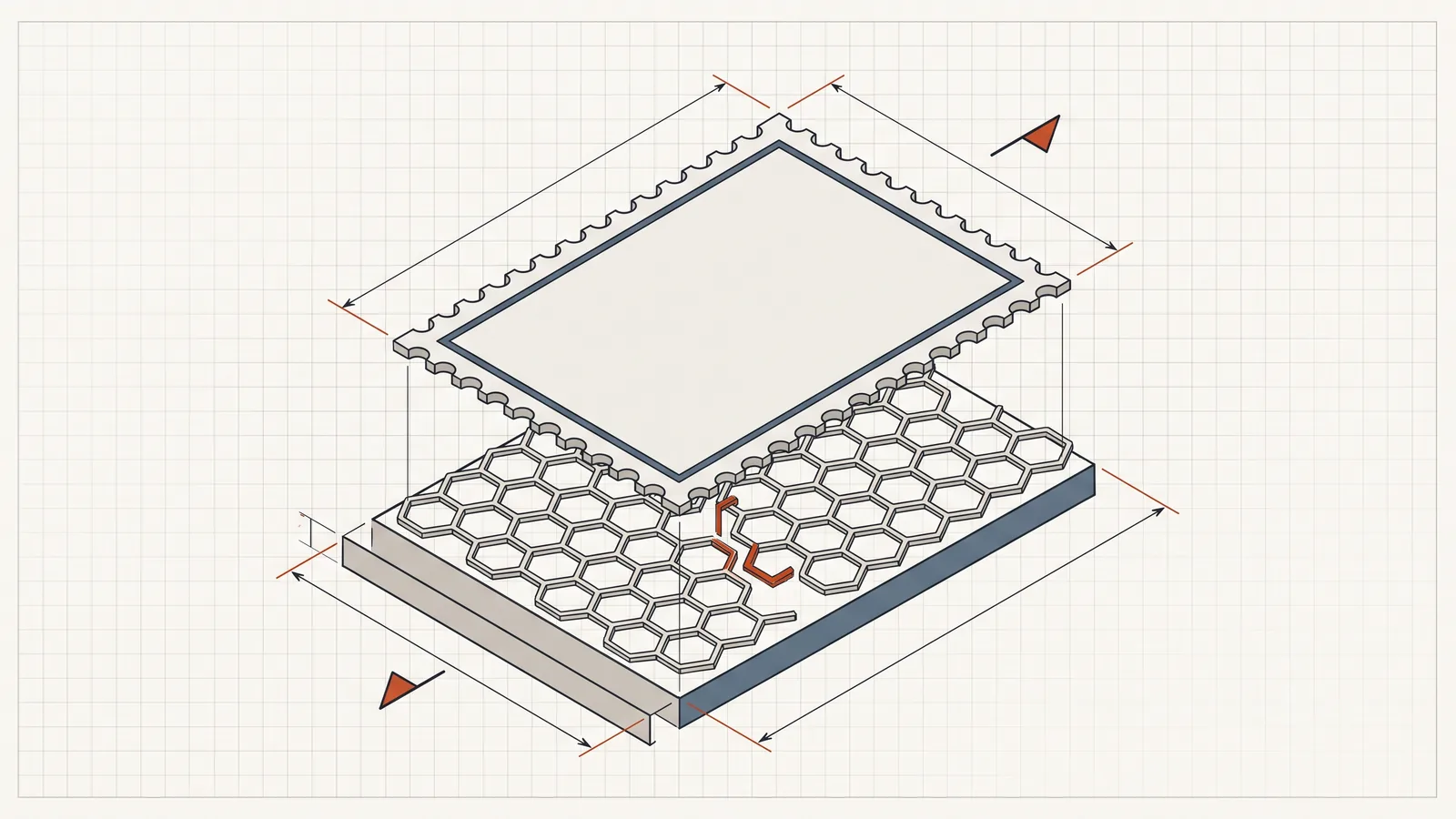
First, the physical item remains a full postage stamp, and the token is its counterpart rather than its replacement. That ruled out every variant in which postal value migrates onto the chain.
Second, purchase had to work through a channel the customer already used, paying in a form they already used. A crypto wallet could not be a precondition of the transaction; it had to be something a buyer arrives at afterwards, if they want to.
Third, the properties of the issue belong where they can be verified, in the smart contract. The digital counterpart is subject to the same discipline of print run and numbering as the paper one, otherwise it is not a counterpart but a picture.
These principles produced a work stream that technical project plans usually omit: explanatory material for customer service and for branch staff. The first question the product had to answer was what a person at the counter should be told about what they are actually buying. I treated that as part of the delivery, not as a follow-up.
I accepted two costs deliberately here. I did not build a secondary market, so the operator makes no promise about liquidity or price. And buying without a wallet means that part of the audience meets real key custody later rather than at the point of sale. That is a trade made for reach, not an oversight.
Outcome
The product reached the market as a public issue by the national postal operator, available across the country, with its product site at nft.poczta-polska.pl. The dedicated issue site has since been retired along with the campaign, the ordinary fate of campaign pages; of the public traces, the press coverage of the launch remains.
Beyond the release itself, an organisational precedent exists: an institution with a century of issuing practice now has a tested path for agreeing a digital product across its philatelic, legal, commercial and technology functions.
What it taught me
In a regulated organisation, the technology is the cheap part of the problem. The expensive part is agreeing what the product is in the categories that organisation already uses, because only then can it be sold, supported and defended in an audit.
The second lesson concerns new technology in a mass-market channel: the user does not adapt to the architecture. If a product demands a new competence from the buyer before the transaction, what the project actually sells is that competence.